A Tangier-to-Tetouan drive works best when the car delivers you to a clear arrival point and the city visit continues on foot. The destination is not a single roadside monument that you can understand from the driver's seat. Decide where the road journey ends, how you will enter and leave the medina, and whether you are returning to Tangier that evening. Those decisions make a more useful starting point than promising an exact travel time or fitting three northern Moroccan cities into one day.
Choose Tetouan as the visit, not just a stop on the way
The Moroccan National Tourism Office presents Tetouan through its medina and Andalusian heritage, alongside its wider Mediterranean setting. UNESCO recognises the medina as a World Heritage property. For a traveller, that suggests a city visit built around streets, architecture and everyday urban life, rather than a race to one viewpoint before returning to the car.
Choose the kind of day you want: an introductory walk with lunch, a guided cultural visit or an overnight stay that allows a slower pace. Make that choice before adding the coast or another inland city. If everyone in the group wants something different, agree one shared priority and one optional addition rather than building a list that only works if nobody stops.
This is a northern Morocco itinerary, separate from the longer routes around Marrakech or Fes. A country-wide rental plan can include several regions, but a Tangier day should be assessed on its own departure point and return needs. Do not use an itinerary designed for a private driver or a multi-day tour as proof that the same schedule suits a self-drive visitor.
Use a current route between real addresses
The tourism office places Tangier and Tetouan roughly sixty kilometres apart, while its displayed journey estimates vary. Treat that as geographical context, not a door-to-door promise. Check the route from your actual Tangier accommodation or rental collection point to the parking or accommodation entrance you intend to use in Tetouan. City departure and arrival can matter as much as the open-road distance.
A generic medina pin is not a driving instruction. Identify a road-accessible endpoint before you leave, then save a separate pedestrian route for the final approach. If accommodation lies within the historic area, ask the host for its vehicle arrival and luggage instructions. The address where you sleep and the place where a rental car can legally stop may not be identical.
Check current traffic and any route notices on the day. Do not follow an apparent shortcut into narrow lanes simply because a navigation application continues drawing a line. If the proposed final turn looks inconsistent with signs or access controls, stop somewhere legal and verify it. The itinerary should adapt to the actual road arrangement, not the other way round.
Confirm Tangier collection before planning the departure
Search the Morocco car catalogue with the collection location and dates you actually need. This article does not establish that a particular supplier, model or airport handover is available in Tangier on your date. Read the selected offer and confirmation before arranging the rest of the day around a car you have not yet secured.
Allow for the handover as a separate appointment. Check documents, the vehicle condition, fuel arrangements and the return instructions before starting the road trip. A scheduled flight, train or ferry arrival should not be treated as the moment you will begin driving. If the first day includes travel into Morocco, a less ambitious collection-day programme may be more comfortable.
Choose a car that suits the passengers and bags without creating an unnecessary parking challenge. If staying overnight, check luggage capacity for the complete group. If more than one person may drive, arrange approval in the rental agreement. The fact that Tetouan is a day-trip destination does not remove documentation, age or additional-driver requirements.
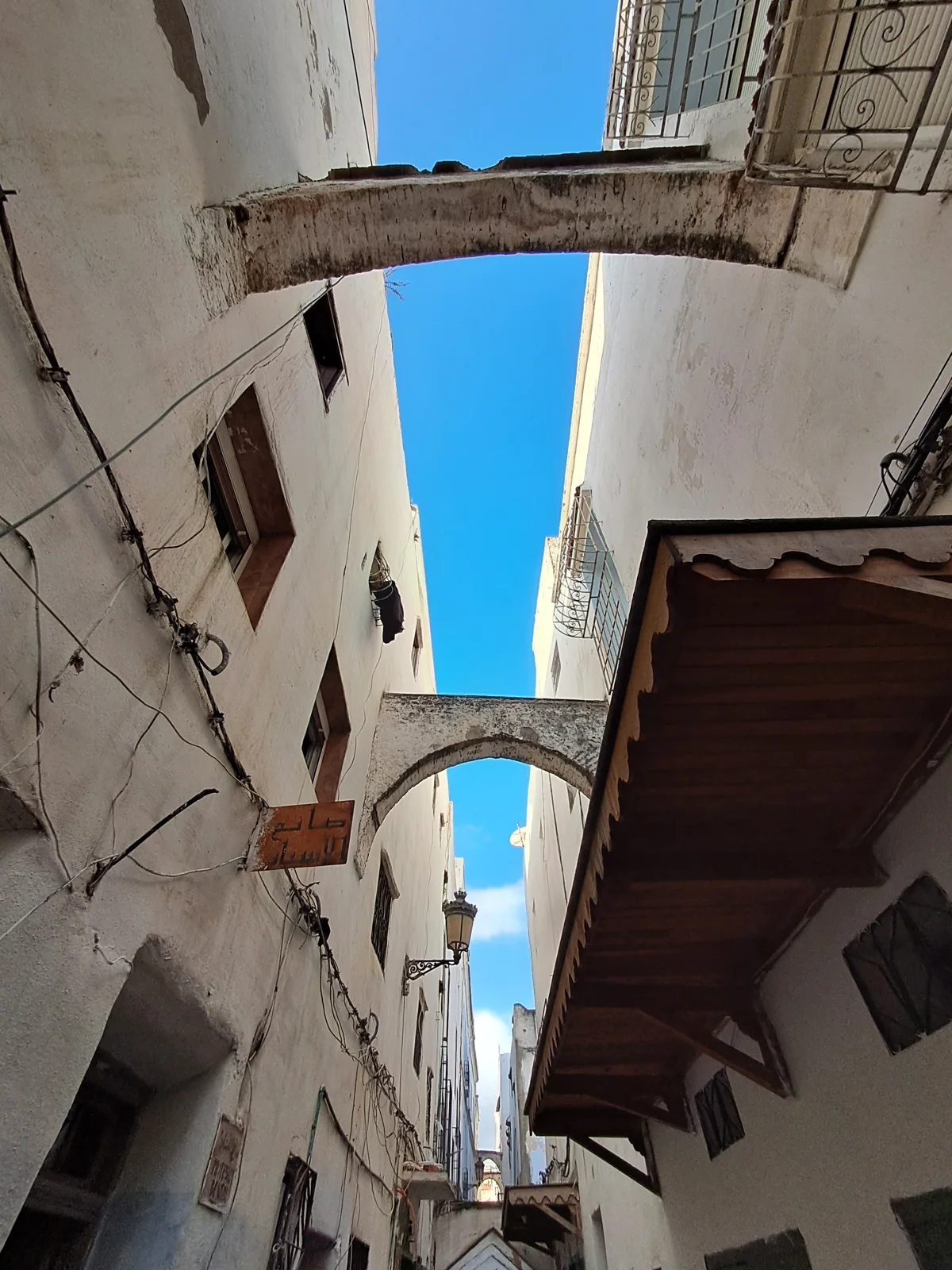
Plan the parking-to-medina transition before arrival
Choose an identified legal parking arrangement outside the historic walking lanes, or obtain specific instructions from your accommodation. Check signs, operating times, the payment method and any maximum stay. This guide does not promise a named space will be vacant or free. An old photograph showing cars beside a gate is not evidence that a visitor may park there today.
Before leaving the car, record the location and the route back to it. Use a recognisable street or entrance as well as a phone pin, particularly if the pedestrian route starts from a different side of the parking area. Keep the rental key secure and remove visible valuables from the cabin. Take what you need for the walk so returning for a forgotten item does not fragment the visit.
For a passenger who cannot walk far, ask about a legal drop-off and the remaining approach before travelling. Do not assume the driver can enter the medina or wait beside the desired doorway. Agree where the group will meet again and how the driver will return after parking. A clear meeting arrangement is more reliable than trying to coordinate while blocking a narrow access point.
Make the first medina walk easy to retrace
At the start, identify your entry point and one dependable meeting landmark. Save the accommodation or parking contact details and keep enough battery for the return. A map can help orientation, but it should not become a reason to walk into private spaces or disregard a closed passage. Allow the route to follow the public access you actually find.
If you want interpretation rather than independent wandering, arrange a guide through a verifiable provider and agree the meeting point, duration, language and cost beforehand. Clarify whether transport or admissions are included. This guide does not endorse an unsolicited offer at a parking area or claim that any person giving directions is an authorised guide.
Keep the first loop compact. Stop for a drink or meal before the group becomes tired, and decide whether to continue from there. Families may prefer a route with a clear return point rather than a long one-way walk that depends on finding another vehicle at the end. Respect residents, ask before photographing people and avoid treating shops or homes as exhibits you are entitled to enter.
Choose an indoor visit only after checking its arrangements
A general description of Tetouan's heritage does not establish that every museum, religious building or courtyard is open to visitors. If a particular interior is important to your day, check its own current programme and visitor rules. Do this before allocating the whole driving day around it, and distinguish ordinary public access from an appointment or guided visit.
Build the walking route around one confirmed priority rather than several assumed openings. If the priority is unavailable, decide whether the medina walk and other publicly accessible areas still make the trip worthwhile. That decision is easier before departure than after you have parked, paid for the car and promised the group a specific experience.
For accessibility, ask about the actual route through the venue, not merely whether the city is suitable for visitors. Steps, narrow passages and uneven surfaces can affect different travellers differently. Describe the assistance needed and leave room to shorten the visit without making anyone feel responsible for disrupting an overfilled schedule.
Keep Martil and Chefchaouen as separate choices
The national tourism office associates Tetouan with the Mediterranean coast, including Martil. A coastal addition may suit a group that wants a short change of setting after the city, but it still needs a new arrival point, parking and time on foot. Check whether it contributes enough to justify moving the car rather than simply spending longer in Tetouan.
Chefchaouen is another destination, not a neighbourhood to add casually to the end of a Tetouan walk. Compare the current road journey and the time you want to spend there before combining it with a Tangier return. A map with three attractive names can conceal a day dominated by driving. Choose a separate day or an overnight route when that better matches the visit.
For a simple first trip, let Tetouan remain the only required destination. Make the coast optional and leave Chefchaouen for a properly planned itinerary. That gives you room for a longer lunch, a delayed start or an unexpected closure without forcing the driver to recover the schedule. Flexibility is one of the benefits of a rental car, not an obligation to use every possible road.
Compare returning to Tangier with staying in Tetouan
A same-day return keeps luggage and accommodation arrangements simple. It works best when you leave enough time for the walk and start the return before the driver is tired. Set a sensible departure decision in advance, using the actual journey estimate and any fixed evening commitment. An optional attraction should be removed if it makes that return uncomfortable.
An overnight stay can suit travellers who want a slower visit or are continuing elsewhere the next day. Before booking, ask the accommodation where the car will stay, whether that space is reserved and how luggage reaches the property. Confirm the vehicle-access arrangement separately from the room. A historic address can be appealing while still requiring a walk from the nearest legal stopping point.
Staying overnight does not mean you can end the rental there. The Morocco one-way rental guide explains the distinction between driving to another city and arranging an authorised handback. Obtain a specific quote and confirmation for any different return location; do not infer a supplier office or collection service from this itinerary.
Keep money, payment methods and security distinct
Budget using the confirmed rental cost, estimated fuel for the route, parking, meals and any booked guiding or admission. Keep the rental deposit or card hold separate from money you expect to spend. It can still affect the funds available during the trip, but it is not the same category as a paid parking ticket or a museum entrance.
Do not assume one payment method will work for every item. Check the rental's advance, balance and security requirements individually; the Morocco guide to renting without a credit card provides questions to ask rather than a blanket promise. For local spending, confirm the amount and accepted method before using a service, and retain relevant receipts or confirmations.
If you compare a rental with another transport option, compare complete journeys for the same group. Include the connection from your Tangier accommodation, the final arrival in Tetouan and the return arrangement. A car may be convenient for a wider route or luggage, while a compact city-only visit may not need one. Avoid choosing on the basis of a headline price that excludes the parts you actually require.
Return to the car before starting the return timetable
Allow time to walk back, settle any parking payment and organise the group before calculating the road departure. Check the car and set the return destination while stationary. If you are handing it back in Tangier, use the supplier's exact location and instructions, not a broad airport or city-centre pin. Include the agreed fuel level and inspection in the remaining schedule.
If circumstances change, contact the relevant provider before the appointment you expect to miss. A later restaurant meal or a longer guided walk does not automatically extend the car rental. Request an approved change and keep the response. Do not leave the car with a hotel employee or an unrelated person unless the supplier has explicitly agreed to that handover.
Tetouan rewards a clear boundary between transport and visiting: drive to a considered endpoint, leave the car legally and give the medina time on foot. The best itinerary is not necessarily the one with the most kilometres. It is the one that lets the group understand the city and return without turning an enjoyable visit into a race against a preventable deadline.
Questions & answers
Should I navigate directly to a medina pin?
Use a confirmed road-accessible parking or accommodation arrival point, then a separate walking route. Do not assume a historic-area pin is a legal vehicle entrance.
Can I combine Tetouan and Chefchaouen in one Tangier return day?
Assess the current journeys and the time you want in each place. This guide recommends a focused Tetouan visit rather than treating another city as a short automatic extra.
Does this itinerary confirm car collection or return in Tetouan?
No. Availability and one-way handback must be confirmed for the selected supplier, dates and booking.